
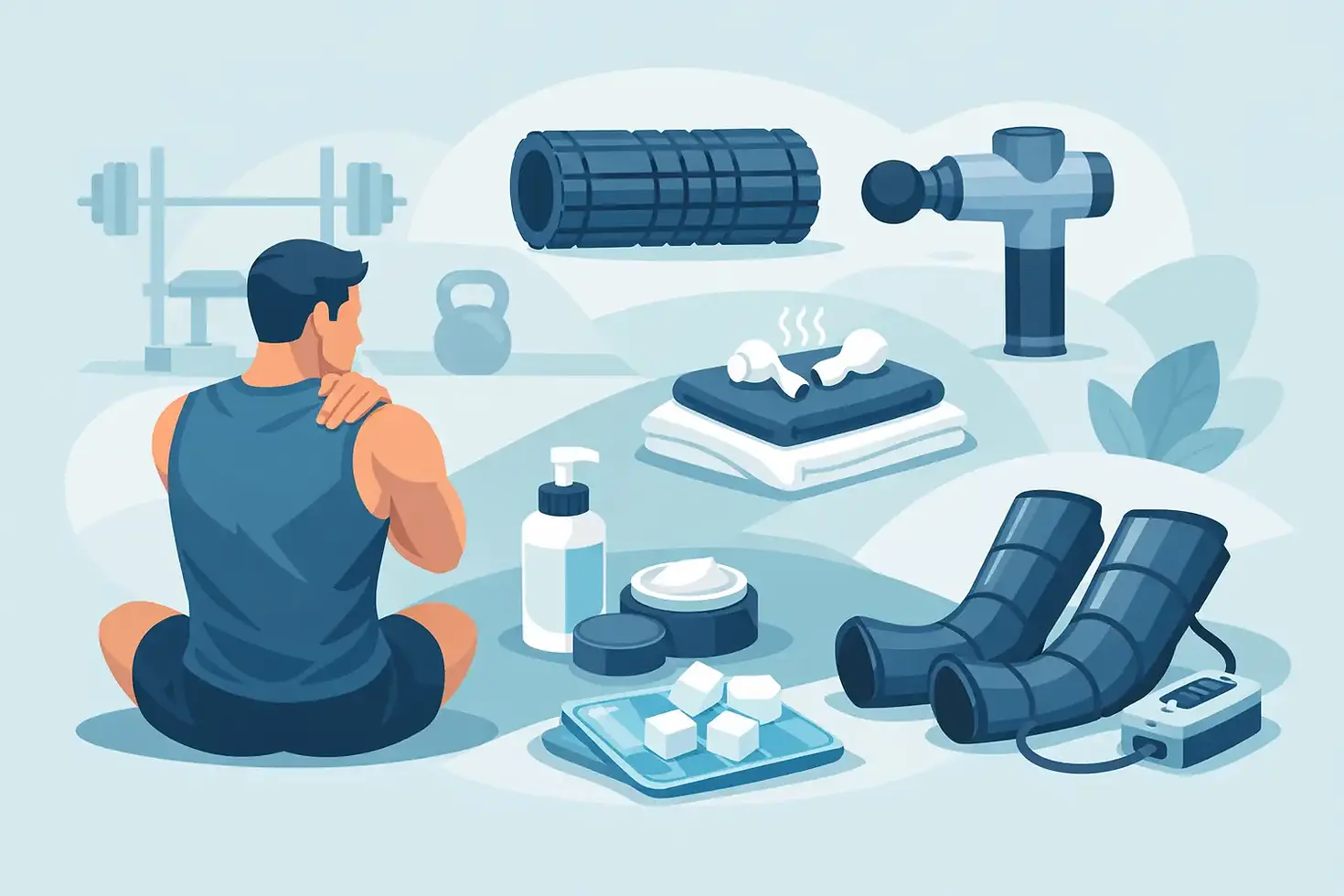
7 Top Recovery Tools After Lifting
You finish a hard lifting session feeling strong, then the next morning your hips are stiff, your upper back feels locked up, and sitting down reminds you that leg day was real. That is usually the moment people start looking for the top recovery tools after lifting. The good news is you do not need a pile of trendy gadgets. You need the right tools for the right problem.
Recovery is not about doing more just to feel productive. It is about getting back to training with less soreness, better movement, and fewer little issues that turn into missed workouts. For some people that means ten minutes in a sauna. For others it means soft tissue work, better sleep habits, or finally addressing the shoulder that has been bothering them for months.
What makes the top recovery tools after lifting worth using?
A recovery tool is only useful if it helps you train more consistently. That is the real standard. If something feels good for five minutes but does not improve soreness, range of motion, or readiness for your next session, it may be more of a luxury than a necessity.
That does not mean comfort has no value. Sometimes the best tool is the one you will actually use. But in a strength-focused routine, the goal is simple: reduce unnecessary fatigue, improve movement quality, and support tissue recovery so your next workout is productive instead of sluggish.
The best approach is to think in categories. Some tools help circulation and relaxation. Some help with muscle tension and mobility. Some are more targeted and better when you have a stubborn issue instead of general soreness.
1. Foam rollers are still useful when you use them well
Foam rollers are easy to dismiss because they are common, but they remain one of the most practical recovery tools after lifting. They can help reduce that heavy, tight feeling in the quads, glutes, lats, and upper back, especially after high-volume training.
The mistake is treating foam rolling like punishment. If you are grinding over every inch of your body for 30 minutes, you are probably doing too much. A few slow passes over areas that feel restricted is usually enough. Focus on spots that affect how you move in training. For example, tight quads and adductors after squats, or lats and triceps after bench and overhead work.
Foam rolling is best for short-term relief and improved movement quality. It is not a fix for every ache, and it does not replace warm-ups, strength balance, or good programming. But for a low-cost tool, it earns its place.
2. Massage guns can help, but they are not magic
Massage guns became popular fast because they are quick, convenient, and honestly pretty satisfying after a tough session. Used well, they can help calm down tight areas and make it easier to move before or after training.
They work best when you keep expectations realistic. A massage gun may reduce the sensation of tightness in the calves, pecs, or glutes, but it is not rebuilding muscle faster on its own. Think of it as a way to improve comfort and range of motion, not a replacement for sleep, nutrition, or actual treatment when something hurts.
They are also not ideal everywhere. Going too aggressive on tender joints or irritated areas can make things worse. If a muscle is sore from training, light to moderate pressure usually does the job. If something feels sharp, unstable, or more like pain than soreness, that is a different situation.
3. Sauna is one of the best tools for general recovery
For many lifters, sauna is one of the easiest recovery habits to stick with because it feels good and supports the bigger picture. After lifting, sauna can help you relax, decompress, and shift out of the go-hard mode that often follows intense training.
That matters more than people think. Recovery is not just about muscles. Your nervous system, stress level, and sleep quality all affect how well you bounce back. A sauna session can support circulation and help your body settle down, especially if your workouts happen late or your schedule is packed.
There is a trade-off, though. More is not always better. Long sessions without enough water and electrolytes can leave you feeling drained instead of refreshed. If you use the sauna after a heavy lift, pay attention to hydration. Start with a manageable amount of time and build from there.
4. Stretching works better when it is targeted
Stretching gets overhyped by some people and ignored by others. The truth is in the middle. Randomly holding stretches because you feel like you are supposed to is not very useful. Targeted stretching based on your training and limitations can be.
If front squats leave your wrists and lats tight, or deadlifts light up your hamstrings and hips, that is where focused mobility work makes sense. A few minutes after training or later in the day can help restore positions that matter in the gym.
Static stretching is not the only option either. Controlled mobility drills often work better for lifters who need usable range of motion, not just looser muscles. The goal is to move better under load. Recovery work should support that.
5. Massage therapy helps when soreness turns into restriction
There is a big difference between normal post-lift soreness and the kind of tightness that keeps showing up week after week. That is where massage therapy can be one of the top recovery tools after lifting.
A good session can help with tissue tension, problem areas, and movement restrictions that are harder to address on your own. It is especially helpful for lifters dealing with recurring upper trap tightness, low back stiffness, or hips that always feel beat up after lower-body training.
This is also where convenience matters. When recovery support is built into the same place you train, it becomes much easier to stay consistent instead of waiting until something gets bad. At Legacy Barbell Club, that all-in-one setup matters because members are not just looking for a place to lift. They want a place that helps them keep lifting.
6. Physical therapy is the smart call when something is not improving
Some recovery tools are about feeling better. Physical therapy is about solving a problem. If you have pain that keeps returning, loss of strength on one side, or movement that feels off for more than a few sessions, this is usually the better next step.
A lot of lifters wait too long because they assume they need to just push through it. Sometimes that works. Often it turns a small issue into a longer interruption. Physical therapy can help identify what is actually driving the problem, whether that is joint limitation, poor load tolerance, weakness, or movement compensation.
This matters for beginners and advanced lifters alike. New members often need help learning what discomfort is normal and what is not. Experienced lifters need a plan that keeps them training while they address the issue. Good PT bridges that gap.
7. Dry needling can be a strong option for stubborn tension
Dry needling is not for everyone, but it can be very effective when a muscle stays guarded or irritated despite stretching, rolling, and massage. For some lifters, it helps calm down trigger points and restore motion in areas like the shoulders, glutes, calves, or upper back.
The key is using it for the right reason. Dry needling is not a trendy add-on for general recovery if you are feeling fine. It is better suited for specific muscular tension patterns that are limiting movement or creating repeated discomfort.
Like other targeted treatments, it works best as part of a bigger plan. If your training setup, technique, or recovery habits stay the same, the same issue may keep coming back.
How to choose the right recovery tool for you
If you are mostly dealing with normal soreness, start simple. Foam rolling, light stretching, hydration, and sauna can go a long way. If you feel tight in the same places every week, a massage gun or massage therapy may help more. If you have pain, weakness, or a movement issue that is affecting training, physical therapy is usually the smarter route than guessing.
Your training style matters too. A powerlifter pushing heavy compound lifts may need more targeted work around hips, shoulders, and bracing-related tension. A newer gym member doing full-body training might benefit more from general tools that improve comfort and consistency.
The best recovery routine is the one you will actually keep doing. It does not need to be fancy. It needs to match your body, your schedule, and your training goals.
If lifting is part of your life, recovery should be part of it too - not as an afterthought, but as the reason you can come back tomorrow and train well again.


Comments