
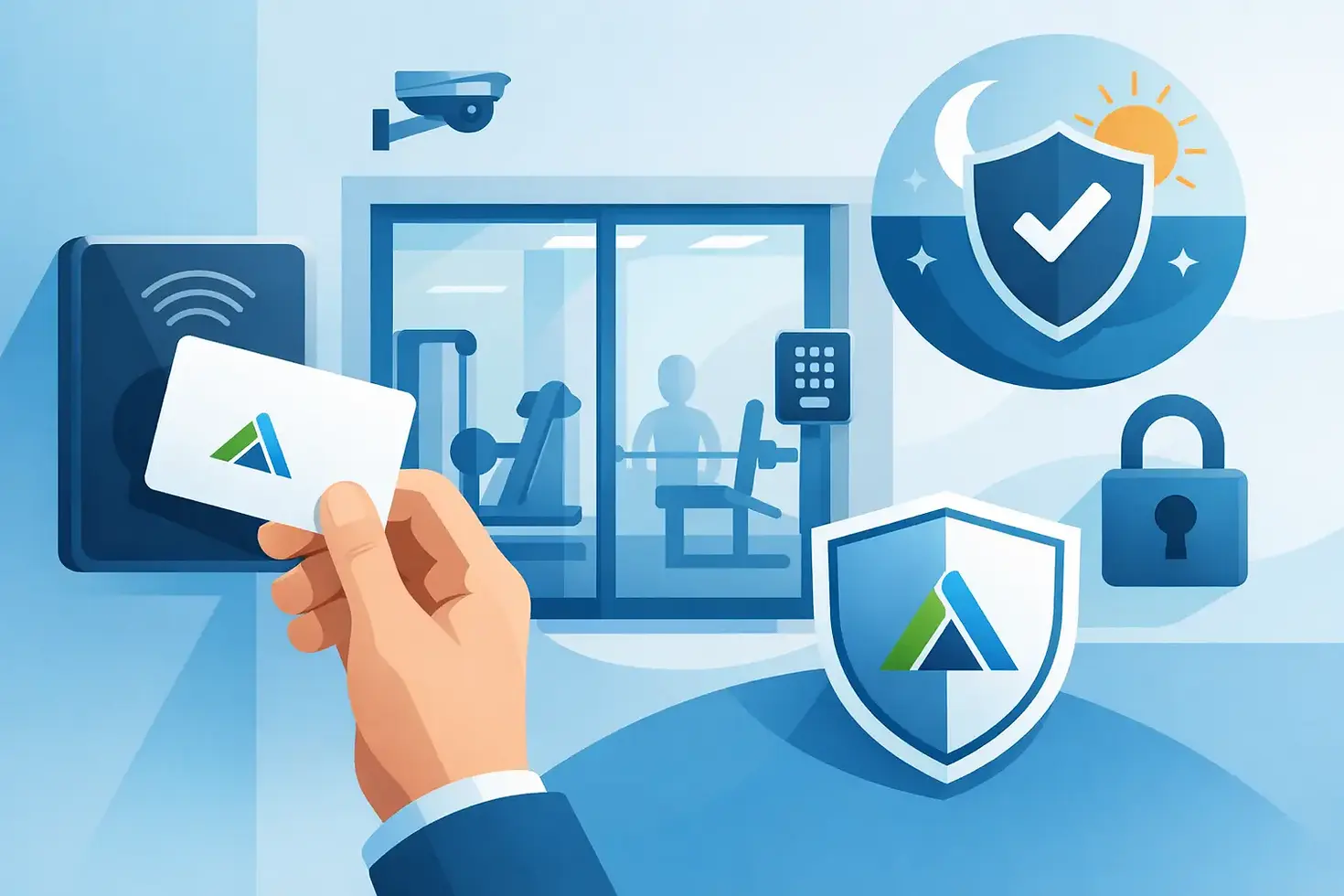
Key Card Gym Security for 24/7 Peace of Mind
A 24-hour gym only works when members feel comfortable training at 5 a.m., after a late shift, or whenever their schedule opens up. Key card gym security is a major part of creating that confidence. It gives members reliable access to the facility while helping protect the equipment, recovery spaces, and respectful training environment everyone pays to enjoy.
For a strength-focused gym, security is not about making the space feel restrictive. It is about protecting the freedom to train on your own schedule. The right access system supports a cleaner, more accountable community where first-time gym members and experienced lifters can focus on the work in front of them.
Why Key Card Gym Security Matters
A key card system creates a clear connection between facility access and active membership. Instead of leaving an exterior door open or relying on a front desk employee to recognize every face, the gym can manage entry in a consistent way at all hours.
That matters most when the gym is less staffed or unstaffed. Members using the facility early in the morning or late at night deserve the same controlled entry experience as someone arriving during peak evening hours. A card-based system limits access to approved members, helps reduce unauthorized visitors, and gives the facility a better way to respond if a card is lost or a membership status changes.
It also protects the member experience. Gyms contain valuable equipment, personal belongings, and shared amenities that require care. When access is controlled, members are more likely to feel that the space is being looked after. That sense of accountability can make a real difference in a community gym, especially one built around members who train consistently and take pride in the facility.
Security Should Support Convenience, Not Fight It
The best key card gym security system is simple from the member's point of view. A member should be able to arrive, use their assigned card, enter promptly, and get to training. Nobody wants to stand outside after a long workday troubleshooting an app, waiting for another person to let them in, or wondering whether the door will work.
At the same time, convenience needs reasonable boundaries. Members should not hold the door for unknown people or bring in guests without following gym policy. That can feel awkward in the moment, particularly for friendly people who want to be helpful. But controlled entry only works when the community understands that access is part of the membership value.
A good rule is straightforward: if someone needs access, they should use their own active credentials or check in through the proper guest process. This is not about treating people with suspicion. It is about keeping the facility available, clean, and secure for the members who rely on it.
Lost Cards and Shared Access Create Avoidable Problems
A physical key card is convenient, but it should be treated like a house key. If it is lost, members should report it quickly so the old card can be deactivated and replaced. Waiting a few days because the card might turn up can create an unnecessary security gap.
Sharing a card is another issue. A card may seem like a small thing to lend to a friend who wants to lift once or twice, but it removes the accountability the system is designed to provide. It can also create confusion in an emergency or if equipment is damaged. A friend who wants to try the gym deserves a proper introduction to the space, not a borrowed card and a vague set of rules.
A Safer Gym Is More Than a Locked Door
Controlled entry is one layer of a better gym environment, not the entire plan. The facility itself also needs clear expectations, well-maintained equipment, good lighting, organized training areas, and a culture where members look out for the space and for one another.
In a 24-hour gym, people train at very different times and with very different experience levels. One person may be learning how to squat for the first time. Another may be preparing for a powerlifting meet. Both should have room to train without feeling crowded, intimidated, or uncertain about whether the space is being managed responsibly.
That is where member behavior matters. Re-racking weights, wiping down equipment after use, returning recovery tools to their proper place, and reporting maintenance concerns all contribute to a more secure facility. These habits may not look like security measures, but they help create a gym where problems are noticed early rather than ignored.
Security also includes knowing when to ask for help. If a door does not latch correctly, an unfamiliar person is repeatedly trying to enter behind members, or a piece of equipment appears unsafe, reporting it promptly protects everyone. Small concerns are easier to address before they become bigger disruptions.
What Members Should Expect From 24/7 Access
A quality 24-hour gym should make access feel dependable while setting clear standards for responsible use. Members should know how entry works, what to do if their card is missing or fails, and how guests are handled. They should also understand that access can be reviewed when membership terms are not followed.
That does not mean every gym needs the same policies. A smaller, community-centered facility may use a different process than a large chain with multiple locations. The right approach depends on the building layout, staffing schedule, amenities, and the needs of the membership base. What should not change is the goal: members should have confidence that the people sharing their gym are supposed to be there.
For gyms with specialty areas such as turf, a sauna, or recovery spaces, controlled access becomes even more valuable. These areas often require extra care, cleaning, and member awareness. Keeping entry limited to authorized users helps preserve the quality of those amenities and makes it easier for the gym to maintain the experience members expect.
How Members Help Protect the Training Community
A strong gym culture does not depend on members acting like security guards. It depends on people respecting a few practical standards. Use your own key card. Do not prop exterior doors open. Avoid letting strangers follow you inside. Report lost cards, damaged locks, suspicious activity, or equipment issues as soon as possible.
Just as important, give fellow members space to train. Late-night lifters, beginners, and serious athletes all have a right to use the facility without unwanted pressure or disruption. A secure gym should still feel welcoming. The goal is not to make every interaction formal or guarded. It is to create a place where respect is normal and everyone can focus on their goals.
At Legacy Barbell Club, 24/7 access is part of helping Indianapolis members build training around real life, not a limited schedule. That access carries more value when every member helps protect the environment behind the door.
The best sign of a secure gym is not a complicated entry process. It is the feeling that you can walk in at the hour that works for you, train with confidence, and leave knowing the next member will find the same clean, focused, welcoming space.


Comments